.png)
10 Best AI Marketing Tools Every Business Should Use in 2026
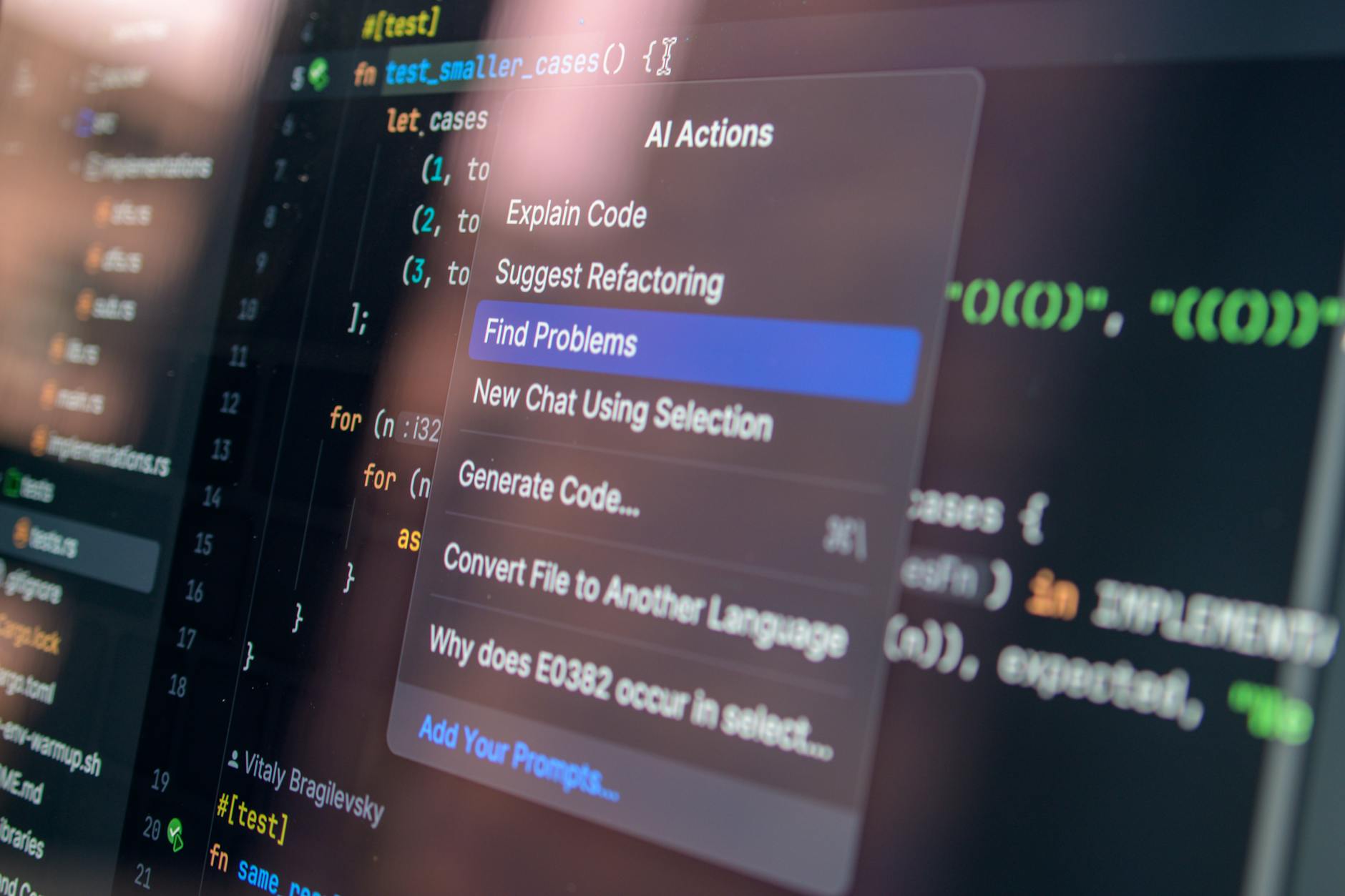
The AI marketing tools landscape has exploded over the past three years. There are now hundreds of platforms claiming to use AI to improve every conceivable marketing function — and separating the genuinely transformative tools from the ones that slapped "AI" on a feature they built years ago requires a clear framework for evaluation. This guide cuts through the noise and covers the 10 best AI marketing tools by category, with specific use cases, what to look for in each category, and how to think about building a stack that works as a system rather than a collection of disconnected point solutions.
Whether you are building your first AI marketing software stack or auditing an existing one for gaps, this is your 2026 reference guide to the tools that are actually moving the needle for businesses in competitive markets.
1. AI SEO Tools: From Keyword Research to Rank Tracking
SEO is one of the highest-ROI marketing channels for most businesses, and AI has fundamentally changed how the best practitioners approach it. The leading AI marketing tools in this category go well beyond keyword research to provide semantic content analysis, predictive ranking models, and automated technical auditing that was simply not possible with traditional tools.
Ahrefs and Semrush remain the gold standard for competitive intelligence, backlink analysis, and keyword research — and both have added significant AI capabilities in recent iterations. Ahrefs' AI content grader and Semrush's SEO Writing Assistant use NLP to analyze content against top-ranking pages and prescribe specific optimizations. For content optimization specifically, Surfer SEO and Clearscope provide the most actionable content briefs based on real-time SERP analysis.
For technical SEO monitoring, Screaming Frog combined with automated alerting through tools like ContentKing (now part of Conductor) provides continuous site monitoring rather than periodic snapshot audits. The ability to catch technical regressions the moment they occur — rather than discovering them during monthly reporting — is one of the highest-value capabilities in the technical SEO toolset.
Our SEO services use a combination of these tools, integrated into a unified workflow that ensures no optimization opportunity falls through the cracks. The tools are only as valuable as the process they support — a point worth keeping in mind when evaluating any AI SEO platform.
2. AI Content Creation Tools: Writing, Editing, and Optimization
AI writing tools have matured significantly since the early days of GPT-3-powered content generators that produced generic, unreliable output. In 2026, the leading platforms produce genuinely useful first drafts that, with proper editorial review, can be refined into high-quality content at a fraction of the traditional cost and timeline.
Claude and ChatGPT remain the most versatile large language models for content creation, capable of handling everything from short-form ad copy to long-form research articles with appropriate prompting. For marketing-specific content workflows, Jasper provides templates, brand voice training, and team collaboration features that make it more practical for content operations teams than raw API access to foundation models.
For content repurposing and multi-format distribution, Descript enables AI-powered audio and video editing alongside text content creation — a particularly valuable capability for businesses building content across multiple formats simultaneously. Canva's AI tools (Magic Write, text-to-image, background removal) make it accessible for non-designers to produce professional visual content at scale.
The most important thing to understand about AI content tools is that they require a strong editorial framework to produce content that reflects your brand voice, maintains accuracy, and delivers genuine value to readers. Tools are the accelerant — strategy and quality control are what determine whether the output actually performs. Our content strategy services include the editorial frameworks needed to use these tools effectively at scale.
3. AI Email Marketing Platforms: Personalization and Send-Time Optimization
Email marketing has benefited enormously from AI, particularly in the areas of send-time optimization, subject line testing, audience segmentation, and content personalization. The platforms that have built AI most deeply into their core product are delivering meaningfully better results than traditional email service providers.
Klaviyo is the dominant AI-powered email platform for e-commerce, with predictive analytics for CLV, churn risk, and product affinity built directly into segmentation and flow logic. Its AI features enable businesses to send highly targeted sequences based on predicted customer behavior rather than just historical actions. HubSpot's Marketing Hub offers strong AI capabilities for B2B email — including AI-generated subject line suggestions, smart send-time optimization, and predictive lead scoring that integrates directly with email workflows.
For businesses focused primarily on email performance optimization, Phrasee specializes in AI-generated email subject lines and copy that are proven to outperform human-written alternatives in A/B tests. Their models are trained specifically on email performance data, making their output more reliably effective for email contexts than general-purpose writing tools.
4. AI Social Media Tools: Scheduling, Content, and Analytics
Managing social media across multiple platforms — creating content, maintaining posting schedules, responding to engagement, and analyzing performance — is enormously time-intensive when done manually. AI social media tools automate the repetitive elements while providing intelligence that makes the strategic elements more effective.
Sprout Social and Hootsuite have both invested heavily in AI features — optimal send-time prediction, AI-assisted content creation, sentiment analysis for social listening, and automated reporting. For businesses focused on content ideation and repurposing, Buffer's AI assistant can generate social posts from blog content, suggest hashtags, and recommend posting schedules based on audience engagement patterns.
For businesses focused heavily on short-form video, Opus Clip uses AI to automatically identify the most engaging clips from long-form video content and format them for TikTok, Instagram Reels, and YouTube Shorts. This capability alone can dramatically increase the content output from any video investment. Our social media marketing services incorporate these tools into a systematic content operation that keeps clients consistently active across their priority platforms.
5. AI Analytics and Attribution Platforms
Making good marketing decisions requires reliable data — and AI analytics platforms are making it possible to extract meaningful insights from complex multi-channel datasets that would take weeks to analyze manually. The leading platforms in this category provide not just reporting but predictive intelligence and prescriptive recommendations.
Google Analytics 4 with its machine learning-powered predictive audiences, anomaly detection, and automated insights represents the baseline for most businesses. For deeper attribution modeling, Northbeam and Triple Whale have become the preferred platforms for e-commerce businesses that need accurate multi-touch attribution across paid and organic channels. For B2B, Dreamdata provides revenue attribution specifically designed for complex, multi-stakeholder B2B sales cycles.
The common thread across the best AI analytics platforms is their ability to move from descriptive ("here is what happened") to prescriptive ("here is what you should do next") — providing actionable recommendations rather than requiring analysts to manually interpret data. This shift is what makes analytics a growth driver rather than a reporting function.
6. AI CRM and Sales Intelligence Tools
CRM platforms with built-in AI have transformed how sales teams prioritize their time and how marketing teams generate qualified pipeline. The AI capabilities that matter most in this category are lead scoring, next-best-action recommendations, conversation intelligence, and deal risk assessment.
Salesforce Einstein provides the most comprehensive AI layer for enterprise CRM — including predictive lead and opportunity scoring, automated data capture from emails and calls, and AI-generated sales insights. For mid-market and SMB, HubSpot's AI features and GoHighLevel's automation capabilities provide strong AI-assisted CRM functionality without the enterprise complexity and cost. Gong and Chorus add conversation intelligence — AI analysis of sales calls and emails to identify winning patterns and coach reps on deal-specific tactics.
Our CRM and automation services implement and optimize these platforms for clients across industries, configuring AI features to match specific sales processes and buyer journeys rather than using out-of-the-box defaults that rarely fit any business perfectly.
7. AI Paid Advertising Tools: Bidding, Creative, and Audience Optimization
Paid advertising is one of the original AI marketing domains, and the tools have become significantly more sophisticated in their ability to optimize creative performance, audience targeting, and budget allocation simultaneously. The best AI advertising tools handle the computational complexity of cross-channel optimization so marketers can focus on strategy and creative.
Google's Performance Max and Meta's Advantage+ represent the native AI within the two largest ad platforms — and for businesses with strong creative assets and conversion tracking, these AI-driven campaign types frequently outperform manually structured campaigns. For cross-channel management and optimization, Madgicx and Albert.ai provide AI-powered budget allocation and creative testing across multiple platforms simultaneously.
For creative optimization specifically, Motion provides AI-powered creative analytics that identifies which ad creative elements are driving performance — helping creative teams make data-driven decisions about what to produce next rather than guessing at what will resonate. Our paid advertising team uses these tools to continuously improve creative performance and reduce cost per acquisition over time.
8. AI Design and Visual Content Tools
Visual content production has historically been one of the most resource-intensive marketing activities — requiring skilled designers, expensive software, and significant time even for routine creative assets. AI design tools have dramatically reduced both the cost and time required to produce professional-quality visual content at marketing scale.
Midjourney and DALL-E have made high-quality AI image generation accessible to non-designers for ad creative, blog imagery, social content, and concept visualization. Adobe Firefly integrates AI image generation directly into Photoshop and Illustrator, enabling professional designers to use AI as a creative accelerant rather than a replacement. Canva's AI suite provides accessible design tools for marketers without design backgrounds, including AI-powered layout suggestions, brand kit application, and text-to-image generation.
For video content, HeyGen and Synthesia enable AI avatar-based video production — generating spokesperson videos from text scripts without requiring on-camera talent or video production infrastructure. This capability is particularly valuable for businesses needing to produce localized video content in multiple languages or at a volume that traditional video production cannot economically support.
9. AI Chatbot and Conversational Marketing Tools
Conversational AI has matured from simple FAQ bots to sophisticated qualification and nurturing systems that meaningfully improve lead quality and sales efficiency. The best platforms in this category combine natural language understanding with deep CRM and marketing automation integration.
Intercom's Fin AI agent uses large language model technology to answer customer questions accurately from your knowledge base, escalate complex issues to human agents, and capture lead information through natural conversation. Drift (now part of Salesloft) focuses specifically on B2B pipeline acceleration — qualifying website visitors through AI conversation and booking meetings directly into sales rep calendars. ManyChat provides AI-powered automation for Instagram, Facebook Messenger, and WhatsApp — enabling conversational marketing at scale on social platforms.
The ROI from AI chatbot implementation is most clearly demonstrated in after-hours lead capture and qualification. For businesses where a significant portion of website traffic arrives outside business hours — which includes virtually every business with any online presence — automated qualification and scheduling systems convert visitors who would otherwise leave without engaging. Our CRM and automation services configure and integrate these systems for maximum pipeline impact.
10. AI Marketing Automation Platforms: The Integration Layer
The final — and arguably most important — category is the marketing automation platform that connects all of the above tools into a cohesive, AI-orchestrated system. Without integration, even the best individual tools produce fragmented data and disconnected customer experiences. The marketing automation platform is the intelligence layer that makes the whole stack greater than the sum of its parts.
HubSpot remains the strongest all-in-one option for most mid-market businesses — CRM, email, social, ads, content, and analytics in a single platform with strong native AI features and extensive third-party integrations. Salesforce Marketing Cloud provides enterprise-grade automation with the most powerful AI layer (Einstein) for businesses with complex requirements. GoHighLevel is increasingly the platform of choice for agencies and service businesses — offering a comprehensive automation toolkit at a price point that makes sophisticated systems accessible to businesses that could not afford enterprise platforms.
According to Gartner's Marketing Technology Survey, businesses that effectively integrate their marketing technology stack achieve 25% higher revenue growth than those with fragmented, disconnected tools. The investment in integration is not optional — it is what determines whether your AI marketing tools deliver actual business results or just generate impressive dashboards that no one acts on.
Building the right AI marketing stack for your specific business requires understanding your current capabilities, growth priorities, team structure, and customer journey in detail. Our AI integration services are designed to help you build a stack that works as a system — and our paid advertising, SEO, and content strategy teams are ready to activate those tools on your behalf. Talk to our team about building your AI marketing infrastructure today.
Want to learn more? Keep Reading Below.
AI Conversion Rate Optimization: How Smart Brands Are Doubling Revenue Without More Traffic

AI Digital Transformation: The Complete 2026 Roadmap for Businesses Ready to Lead